

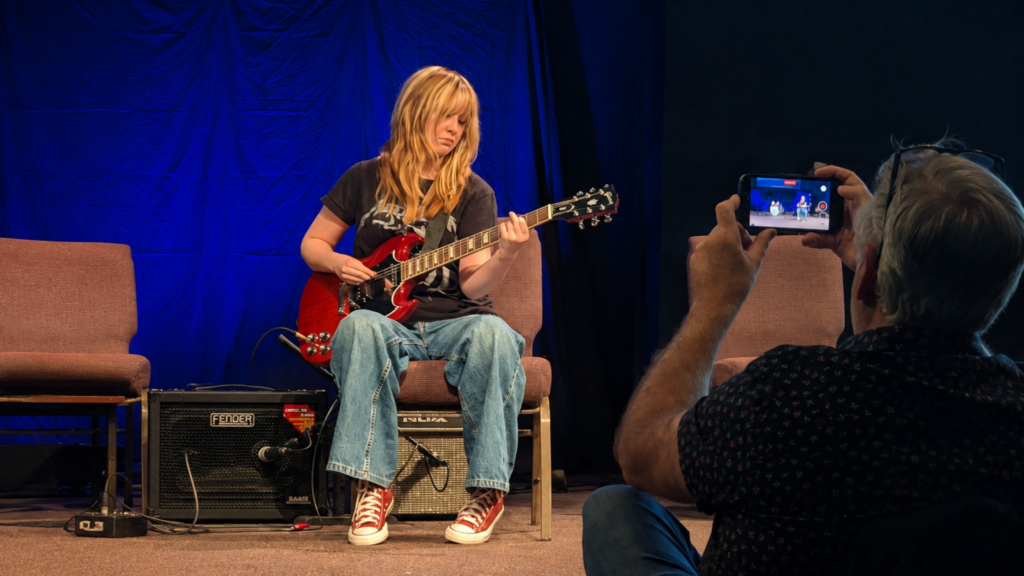
When a child starts music lessons, the spotlight tends to fall on the teacher and the student. But there is a third person in that relationship who matters more than most parents realize: you.
You do not need to be a musician to make a meaningful difference in your child’s musical growth. In fact, some of the most impactful things a parent can do have nothing to do with music at all.
Showing Up Matters More Than You Think
Consistency is the foundation of learning any skill, and music is no different. Getting your child to lessons week after week, even when schedules get full or motivation dips, sends a quiet but powerful message: this is something we take seriously, and you are capable of seeing it through.
It does not have to look like pressure. It can look like enthusiasm. Asking your child what they worked on, listening when they want to play something for you, and celebrating small wins along the way creates an environment where music feels worth the effort.
The Practice Puzzle
Home practice is where lessons really take root, and it is also where parents often feel unsure of their role. Do you push? Do you stay out of it?
The honest answer is: a little of both, depending on the child. Younger students, especially those just starting out, often need a gentle nudge to sit down at the instrument each day. Helping them build a habit, even just 10 to 15 minutes at a consistent time, goes a long way. Older students may need more independence, but still benefit from knowing a parent notices and cares.
Music knowledge is not a requirement for being a supportive practice partner. Simply being nearby, offering encouragement, or just asking ‘can you play me what you learned this week?’ is often enough to keep motivation alive.
Patience Is a Musical Instrument
Progress in music is rarely linear. Some weeks a piece will fall into place beautifully, and other weeks it will feel like starting from scratch. This is completely normal, and how a parent responds in those moments makes a real difference.
Try to resist the urge to compare your child to siblings, classmates, or even their own previous rate of progress. Each child has their own pace, and plateaus are a natural part of the process. What looks like stalling is often the quiet work that happens just before a breakthrough.
Your teacher is your partner in this. Any time you have questions about your child’s progress, your teacher is always happy to talk it through.
Creating a Musical Home
Beyond practice and lessons, one of the most lasting gifts you can give your child is a home where music is part of everyday life. That might mean listening to a variety of music together, attending a live performance now and then, or simply letting your child hear you talk about music with curiosity and warmth.
Children absorb more from their environment than we often realize. When music is treated as something joyful and worthwhile, that attitude tends to stick.
You Are Already Doing More Than You Know
If you are reading this, you are already invested in your child’s experience. That investment, even when it is quiet and behind the scenes, is one of the most important factors in whether a child sticks with music long enough to truly love it.
At The Piano Studio, our teachers are invested in your child’s journey from the very first lesson. But the encouragement that carries the most weight? More often than not, it starts with you.
Thinking about taking the next step? Our Six Lesson Trial Package is the perfect low-commitment way to introduce your child to music lessons, with no instrument required.