

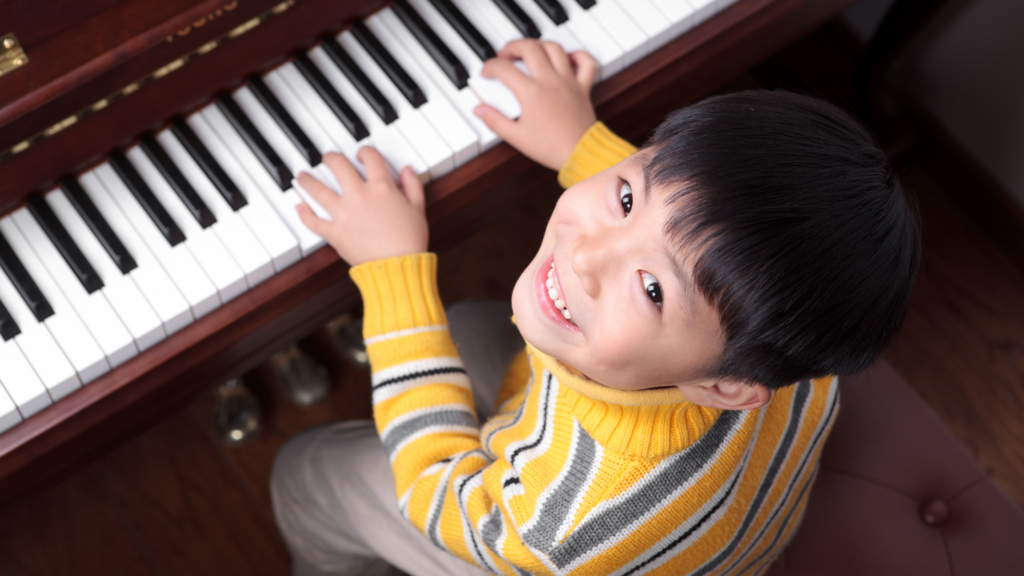
If you’ve ever watched your child sit at the piano after a long day and slowly settle into a calmer mood, you’ve seen something powerful at work. Music lessons support emotional regulation in kids by giving them a healthy way to understand their feelings, manage stress, and build confidence. Many parents tell us they notice a real shift at home once lessons become part of their child’s week. Here’s why.
Music offers a safe outlet for strong emotions
Kids often experience feelings before they have the language to talk about them. Music steps in as another language. When a child plays a soft, steady pattern, they often settle into that same rhythm emotionally. When a piece shifts from loud to quiet, or quick to slow, it mirrors the way feelings rise and fall.
Kids learn they can express frustration through firm, focused playing instead of acting out. They can work through sadness with slower melodies. They discover that feelings aren’t scary. They’re just signals that can be shaped, softened, or released. Over time, this builds emotional awareness long before they can articulate it.
Structured lessons strengthen self-regulation
A music lesson has a natural structure: listen, try, adjust, repeat. This cycle teaches patience more effectively than reminders from an adult ever could.
When a child works through a tricky measure, they learn to pause instead of rush. They learn to breathe, reset their hands, and try again. They see that effort leads to progress, which builds resilience. These are the same skills they’ll use when homework feels overwhelming or friendships get complicated.
Because lessons happen consistently each week, kids practice self-regulation in a predictable, encouraging setting. It becomes a habit, not a chore.
Routine practice creates a calming anchor in a busy week
Children thrive with dependable routines, and daily practice offers one of the simplest grounding moments in a child’s day. Even ten minutes at the piano can help shift their nervous system from busy mode to settled mode.
They repeat familiar warm-ups. They return to melodies they know. They experience small wins, like finishing a song they’ve been practicing for weeks. That combination of routine and growth can lower stress and lift confidence at the same time.
Many parents say their child seems lighter after playing, even if the day started out rough. That settled energy carries into homework, bedtime, and sibling interactions.
Signs your child is benefiting emotionally
Parents often notice emotional growth before kids do. Here are a few signs:
- More patience during challenging tasks, both at home and in lessons
- Fewer outbursts after school, especially on practice days
- A sense of pride when they master part of a song or perform for family
- Improved focus, even outside music
- Self-soothing habits, like sitting at the piano when they’re upset
If you see any of these, it’s a sign your child is using music as a healthy emotional tool.
Music lessons are about far more than notes and technique. They give kids a safe space to understand themselves, build confidence, and develop skills they’ll use for life.